
REVIEW · DADAOCHENG & TAIPEI OLD TOWN WALKS
Taipei’s Origin & Longshan Temple – Taiwan Cultural Walking Tour
Old streets, living beliefs, and temple lights. This tip-based walk threads together Taipei’s oldest layers, with stops that explain how everyday Taiwanese life grew around folk gods, Taoism, and Buddhism.
I especially like the storytelling focus and how it turns architecture and rituals into something you can follow, even if you are new to temples. I also like that the tour is short enough to stay fun (about 2 hours 15 minutes) and ends near the Wanhua night market, so you can keep the momentum.
One thing to consider: English pace can be fast, so if you prefer slow, careful explanations, you may want to ask questions as you go or choose a quieter moment to catch up.
In This Review
- Key things to know before you go
- Longshan Temple at 5:00 pm: Why this timing works
- Price and value: what $5 really gets you
- Bangka Park: Taipei’s older heart, told in 10 minutes
- Bopiliao Ancient Street: how the neighborhood changed over eras
- Longshan Temple (Mengjia Longshan): folk gods, Taoist-Buddhist life, and moonstone practice
- A temple you can actually experience at night
- Guides make or break the religion stories
- The walk from temple to Wanhua night market
- How to get the most out of the stories
- Weather, pace, and small practical notes
- Should you book this Taipei cultural walking tour?
- FAQ
- How much does the Taipei Origin & Longshan Temple walking tour cost?
- How long is the tour?
- What time does the tour start?
- Where do I meet the guide?
- Where does the tour end?
- Is admission free for the stops?
- What is included in the tour?
- Is dinner included?
- Is this tour mostly accessible by public transportation?
- Does the tour depend on weather?
- How big is the group?
Key things to know before you go
- $5 tip-based pricing with a mobile ticket, and the guide time is the real value
- Three classic Wanhua stops in about 2 hours 15 minutes: Bangka Park, Bopiliao Ancient Street, and Longshan Temple
- Hands-on ritual talk at the temple, including how to throw moonstones and interpret the answer
- Great timing for atmosphere, since the temple looks especially beautiful when the lights are on
- Small-group feel with a maximum of 50 people, plus a guide who stays with late or lost guests
- Finish at Wanhua night market, with an easy walk (about 5 minutes) to Longshan Temple MRT
Longshan Temple at 5:00 pm: Why this timing works
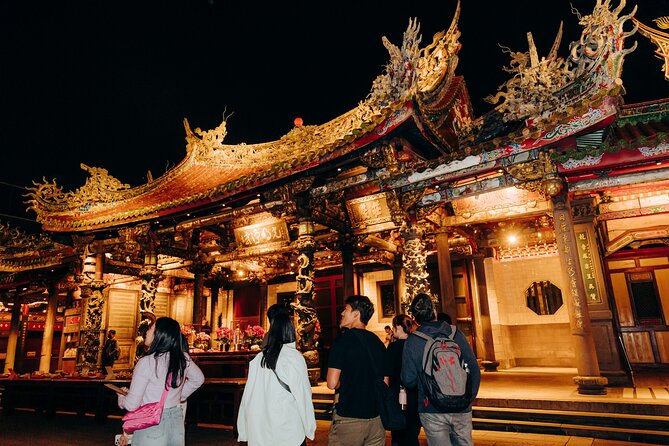
Starting in the early evening is a smart choice for a cultural walking tour in Taipei. By 5:00 pm, the air is cooler than mid-day, and the Longshan Temple area starts to feel alive without being fully chaotic.
I like that the tour is built around how places change through the day. The temple is a major landmark in Taipei, but what makes this experience special is learning why it mattered to everyday people, and then seeing it in the evening light when it feels more human and less like a postcard.
Also, the route is practical. It is a walking plan with nearby transit, and the end point places you right where many people want to go next, the Wanhua night market.
Price and value: what $5 really gets you
The price is just $5 per person, which is unusually low for a guided, story-led cultural walk. The key detail is that it is tip-based, and the tip to the guide is not included in the booking fee.
So think of the $5 as your ticket into the framework, the history and the explanations. The actual cost you control is your tip, which is common for free walking tours in many cities, but it still matters to budget for it if you want to be fair.
Group size is another value signal. With a maximum of 50 travelers, it is not a tiny private tour, but it is also not so huge that you lose the thread of the stories. That said, if you want a more intimate Q and A, go ready to ask questions early.
Deeper into old Taipei, on foot
Bangka Park: Taipei’s older heart, told in 10 minutes
Your first stop is Bangka Park, and the big reason it works is time. You only get about 10 minutes here, so the guide can keep the focus on meaning rather than facts that would take an hour to sort out.
The park’s role is simple but powerful: it used to be the center of Taipei. That tells you something about how cities grow. Long before today’s skyline, local life organized itself around a focal point, and the people who built the city chose where the energy would gather.
If you like understanding the city layer-by-layer, this quick start is useful. It prepares you to look at later stops in Wanhua as part of a timeline, not isolated sights.
Bopiliao Ancient Street: how the neighborhood changed over eras
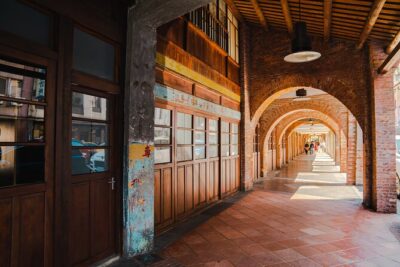
Next up is Bopiliao Ancient Street, where you spend about 20 minutes. This place matters because it is not just old streets, it is a community story that moved through major historical periods.
The community of Bopiliao formed in the early Qing Dynasty, then evolved as Taiwan went through different eras, including Japanese colonization and the early post World War II period. That kind of timeline helps you avoid the common mistake of treating historic areas like frozen museums.
Here is what you should look for as you walk. Notice how the street feels built for daily life, not for tour buses. In a place like this, even if you do not know the architectural terms, you can still sense what the neighborhood values: gathering, exchange, and continuity.
One small downside to keep in mind: because this is a walking tour with several stops, you will want to stay mentally flexible. If you prefer to linger and take lots of side streets photos, you might feel slightly rushed on the way to the bigger moment, Longshan Temple.
More Taiwan on foot, at a human pace
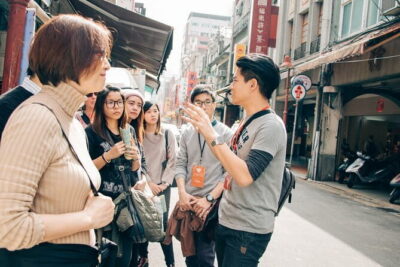
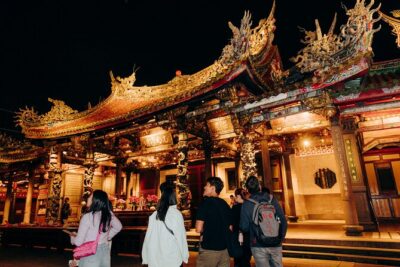

Longshan Temple (Mengjia Longshan): folk gods, Taoist-Buddhist life, and moonstone practice
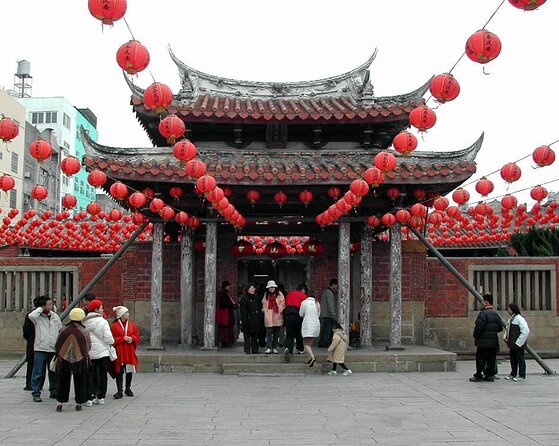
The center of gravity is Longshan Temple, with about 40 minutes here. The temple is widely known, and it has a clear origin story: it was built in 1738 by settlers from Fujian as a gathering place for Chinese settlers.
That starting point makes the rest of the experience easier to understand. You are not only seeing religious art, you are seeing how communities anchored themselves when they arrived, settled, and tried to build stable lives.
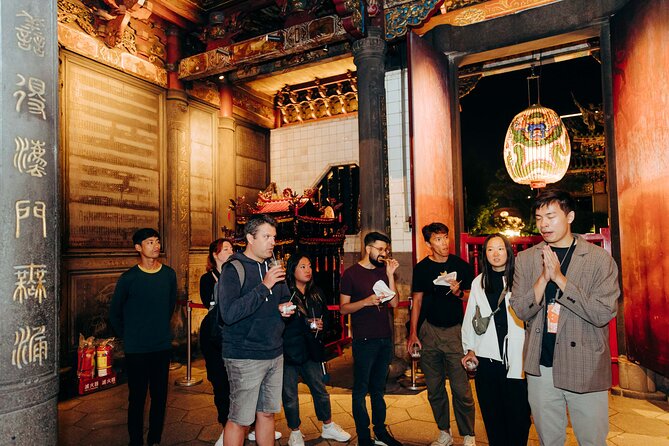
What makes this tour truly distinctive is the ritual context. The guide explains the role of folk gods and how they connect to daily choices, including how ancestors dealt with illnesses without doctors. You also get taught how to throw moonstones and how to interpret messages from the heavens, plus how fortune reading works in this tradition.
Even if you are skeptical, I think the value is in learning the logic people used. These rituals are not random. They are a way to make uncertainty feel navigable, to ask for guidance, and to interpret answers in a shared cultural language.
A temple you can actually experience at night
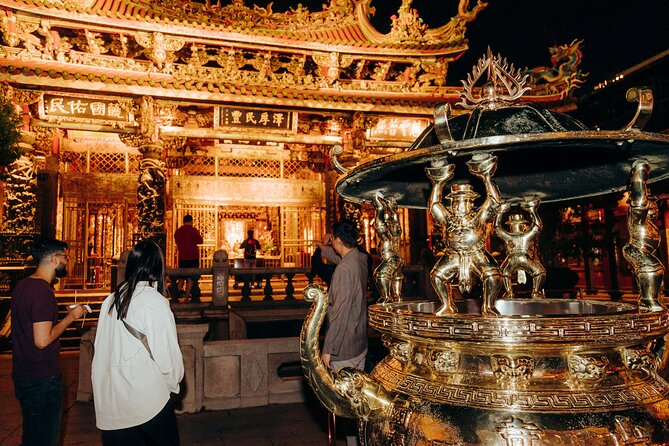
This is also where timing pays off. One guide, Sun, was specifically praised for making the temple history and Taoism feel clear and fun. Another highlight was the temple looking especially beautiful when the lights are lit, which matters because Longshan is one of those places where evening atmosphere changes the mood dramatically.
Guides make or break the religion stories
This tour is highly guide dependent, and the names from recent groups show why. Jenny earned praise for sharing lots of information about beliefs and rituals in Taiwan. Alejandra, named in one review, was described as making the difference with strong personality and knowledge. Jacki Chan also received top marks for organizing the tour and delivering impressive explanations.
If you are the type who learns best through human energy, this is a good bet. The format is designed for storytelling, not lecture-only history.
The walk from temple to Wanhua night market
The tour ends at Wanhua night market, and you can walk to Longshan Temple MRT station in about 5 minutes. That is an underrated detail. You are not left stranded or forced into a long transit decision at the end of a cultural walk.
Wanhua night market also fits the theme of the whole tour. Longshan Temple is deeply tied to community life, and night markets are also about community life. When you walk out of a temple lesson into a place where people eat, socialize, and shop, the culture stops feeling theoretical.
You can also consider a follow-on. One guide, Jenny, mentioned an option to join a night market tour starting at 7:30 with the same company, and there is sometimes a discount. If you like structured street food context, that is worth asking about.
How to get the most out of the stories
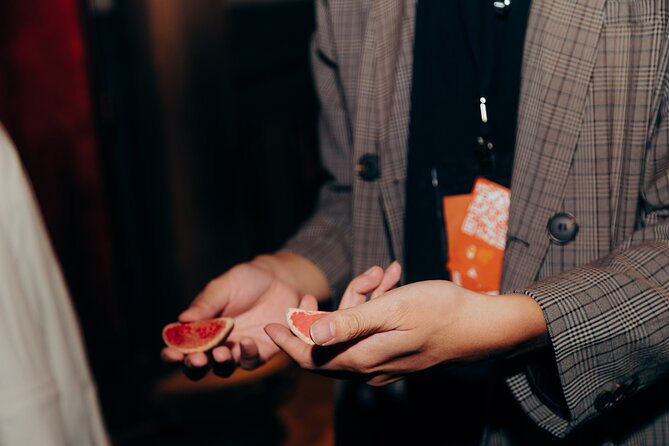
This tour works best when you treat it like a guided conversation with a local cultural lens. The guide’s job is to connect details, like temple origins and folk gods, to what those traditions mean for ordinary people.
To get more out of it, do two things:
- Arrive with a beginner mindset. You do not need to know Taoism or Buddhism ahead of time.
- Stay curious about the practical side of rituals, like what people ask for and how they interpret outcomes.
Also, listen for how the guide links beliefs to real life, including the historical angle of how people handled illness and uncertainty. That is where the tour feels more relevant than just sightseeing.
Weather, pace, and small practical notes
This experience requires good weather. That means you should plan for rain or typhoon risk like a serious evening out, not a guaranteed stroll.
Pace is another practical note. One participant said the English speed was fast enough to be hard to catch at times. That does not mean the information is bad, it means you might want to keep your focus tight and ask for repetition if you need it.
The tour is also designed for most travelers to participate, and service animals are allowed. It is near public transportation, which helps you start on time and get back easily afterward.
If you are thinking about food planning, dinner is not included. So either eat before you go, or have a clear plan for the night market after you finish.
Should you book this Taipei cultural walking tour?
I think this is a strong booking if you want three things at once: clear local storytelling, a major temple experience, and a built-in finish that keeps your evening going.
You should book it if:
- You like learning how religion and community life overlap in everyday Taiwan
- You want a short route that still includes the big landmark in Wanhua, Longshan Temple
- You enjoy hands-on explanations, like moonstone throwing and fortune reading context
- You want value that is hard to beat for $5, especially with the guide doing the heavy lifting
Skip it or be cautious if:
- You prefer slower, step-by-step explanations and struggle with fast spoken English
- You dislike religious settings and do not want to participate in the surrounding ritual culture
- You are expecting a dinner-included food tour rather than a guided culture walk that ends at the market
FAQ
How much does the Taipei Origin & Longshan Temple walking tour cost?
The price is $5.00 per person, and it is a tip-based tour. The tip to the tour guide is not included in the booking fee.
How long is the tour?
The tour lasts about 2 hours 15 minutes.
What time does the tour start?
The start time is 5:00 pm.
Where do I meet the guide?
The meeting point is Longshan Temple, Wanhua District, Taipei City, Taiwan 108.
Where does the tour end?
The tour ends in the Wanhua night market, and you can walk to Longshan Temple MRT station in about 5 minutes.
Is admission free for the stops?
Admission is free at Bangka Park, Bopiliao Ancient Street, and Longshan Temple.
What is included in the tour?
The tour includes a local guide and cultural storytelling, plus the guide helps if you are late or lost.
Is dinner included?
No, dinner is not included.
Is this tour mostly accessible by public transportation?
Yes, it is near public transportation.
Does the tour depend on weather?
Yes, it requires good weather.
How big is the group?
The tour has a maximum of 50 travelers.
More Taiwan Tours on the List



Everything We Have Reviewed in Taiwan

Old Taipei, Street by Street


Fresh off the notebook: more Taiwan tours we have reviewed
- Keelung Shore Excursion: Private 6H Natural Wonder & Seafood Tour★ 5.0 · 3 reviews
- 8-Day Around Taiwan Private Tour★ 5.0 · 3 reviews
- Taiwan Multi-Day Classic Tour★ 5.0 · 4 reviews
- Ruifang Houtong Mining Road★ 5.0 · 4 reviews
- 1 day North Coast Yehliu Jiufen and Shifen Private Tour★ 5.0 · 4 reviews
- Hualien Taroko Day Tour From Ximending★ 5.0 · 4 reviews
Dadaocheng & Taipei Old Town Walks, weighed up.
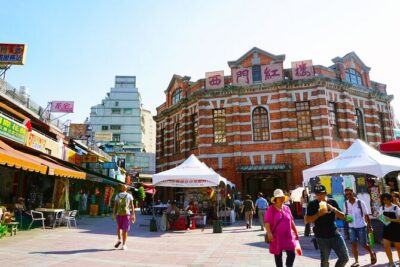 ★ 5.0Taipei Old Town – Taiwan Introduction Walking Tour (Tip-Based)From $5175 reviews
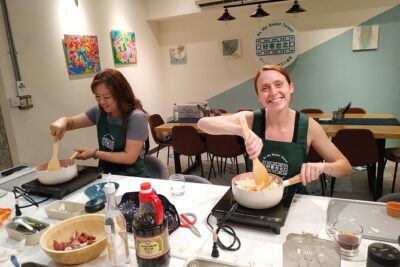 ★ 5.0Taipei Cooking Class & Market Adventure in Historic DadaochengFrom $9077 reviews
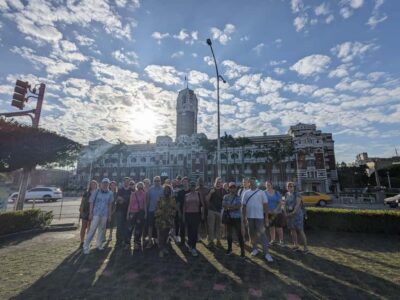 ★ 4.8Old Town Walking TourFrom $125 reviews
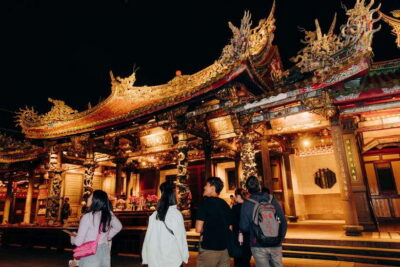 ★ 4.6Taipei’s Origin & Longshan Temple – Taiwan Cultural TourFrom $119 reviews
 ★ 4.9Cooking Class & Market Adventure Historic DadaochengFrom $9917 reviews
 ★ 5.02-Hour Private Dadaocheng Walking TourFrom $3513 reviews
Where else this one shows up