
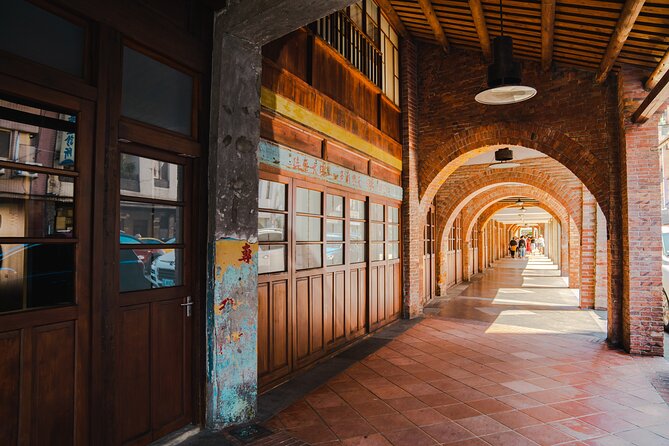
REVIEW · WALKING TOURS
Taipei Historic Shared Walking Tour
History you can walk. This Taipei historic route strings together Qing-era faith, Japanese colonial architecture, and post-1949 politics in one practical 3-hour loop. You’ll move through West Taipei with a professional English guide, not just a list of landmarks.
I especially like how the tour connects places to eras, so the city starts to make sense fast. I also like the value, since most stops are free to enter and the whole experience costs about the price of a coffee.
One consideration: it’s a real walking tour, and it runs best in good weather, so bring comfy shoes and expect some time on your feet.
In This Review
- Key Highlights You’ll Feel in 3 Hours
- West Taipei’s Past Makes Instant Sense on Foot
- Longshan Temple: Late Qing Faith in the Middle of the City
- Bopiliao Historic Block: The Market Past That Shaped Daily Life
- Ximen Red House and Ximending: Colonial Architecture With a New Purpose
- Presidential Office Building: A Short Walk From Entertainment to Power
- 228 Peace Memorial Park: Protest, Memory, and Public Space
- Chiang Kai-shek Memorial Hall: How Post-1949 Politics Show Up in Stone
- Price and Pace: Is $5 Worth Your Feet?
- Guide Quality: Why Names Like Amy, Andy, and Pauline Matter
- What to Bring So You Don’t Miss the Fun
- Who Should Book This Tour, and Who Might Want a Different Option
- Should You Book This Taipei Historic Shared Walking Tour?
- FAQ
- Where does the tour start?
- Where does the tour end?
- How long is the tour?
- What time does it start?
- How much does it cost?
- Is the ticket delivered on your phone?
- Is admission included for the stops?
- Are tips included in the booking fee?
- How many people are on the tour?
- What happens if the weather is bad?
- FAQ
- Can I cancel for a full refund?
- Is there a limit on travelers, and can that affect the tour?
Key Highlights You’ll Feel in 3 Hours
- 300 years, one walking route that links Qing traditions, Japanese rule, and the Nationalist era
- Longshan Temple, Bopiliao, and Ximen Red House in a tight, logical sequence
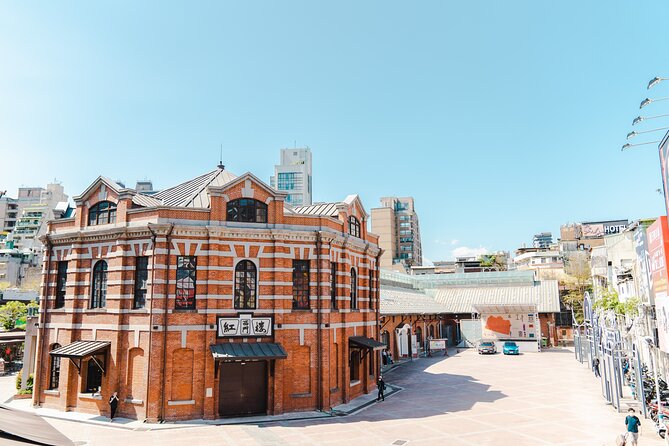
- Colonial-era architecture you can spot right away at Ximen Red House and nearby buildings
- Memorial sites with context at 228 Peace Memorial Park and Chiang Kai-shek Memorial Hall
- Small group size (max 20), which usually keeps the pace smoother and questions easier
- Mobile ticket so you can focus on walking instead of paperwork
West Taipei’s Past Makes Instant Sense on Foot
Taipei’s present can feel loud and modern, but West Taipei tells a different story. This tour is built to help you read the city like a timeline, not as disconnected photo stops. You’re essentially learning how different governments and communities left their fingerprints on the same streets.
The route is designed to cover the “essential attractions” of older Taipei, then connect them to the bigger shifts that shaped Taiwan. It’s a smart way to get your bearings early, especially if your Taiwan trip is short.
And because it’s priced around $5 for a multi-stop guided walk, the value is hard to beat. The only thing to keep in mind is that tips for your guide are not included in the booking fee.
Longshan Temple: Late Qing Faith in the Middle of the City
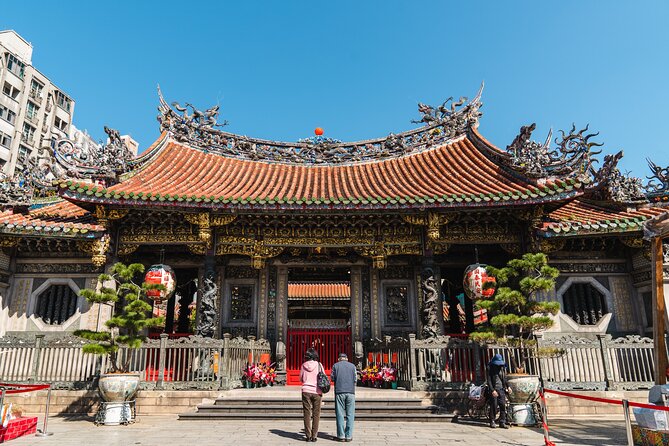
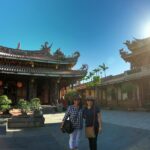
Longshan Temple is the kind of place you don’t just look at, you feel. It sits in the heart of West Taipei and acts as a religious center for the local community. The story here goes back to the 18th century, when Chinese immigrants established the temple and later helped build out areas like Monga District.
What I like about starting here is that it anchors the entire walk in lived tradition. This isn’t just architecture. It’s a community space that helps you understand what people prioritized long before the Japanese colonial period and long before post-1949 politics.
Practical takeaway: dress for temple visits. Even if the stop is quick, plan to be respectful in how you move through the space and where you pause for photos.
More Taiwan on foot, at a human pace
Bopiliao Historic Block: The Market Past That Shaped Daily Life
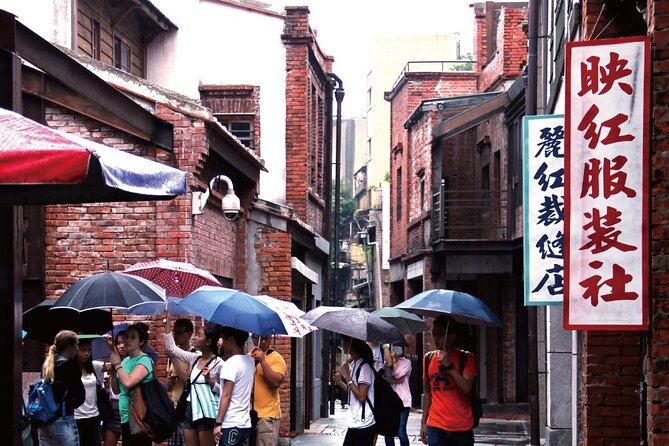
Next comes Bopiliao, a historic block with a name that literally points to trade work in old Taipei. It was once a commercial center where Chinese immigrants conducted trade with Indigenous communities. In its heyday, the streets were lined with commerce, and the area became a key part of how northern Taipei functioned.
This stop matters because it gives you a “people and economy” angle, not only a political angle. If Longshan helps you understand belief and community, Bopiliao helps you understand why these communities clustered where they did.
If you enjoy walking through older street patterns, you’ll likely find this area especially rewarding. It’s the kind of place where the details in shopfronts, alleys, and building scale do the explaining, once your guide places them in context.
Ximen Red House and Ximending: Colonial Architecture With a New Purpose
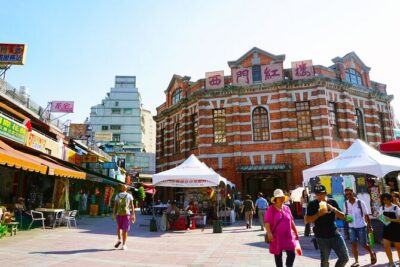
Then the walk shifts into a more “seen-it-on-Instagram” kind of landmark: Ximen Red House, right by Ximending. The building began life as a public market, and it shows strong architectural characteristics associated with Colonial Japan.
After Japanese rule ended, the building gained a new role, turning into a theater. So you get a neat transformation story: a structure designed for one era’s needs becomes cultural space for another era’s public life.
This is a good moment to slow down and look closely. Colonial-era style can feel subtle until you know what to watch for, and your guide should help you spot those design cues without turning it into a lecture.
Also, if you like markets and crowd energy, Ximending is nearby, so you get a natural bridge between historic buildings and the modern Taipei vibe.
More of the Taiwan the history readers come for


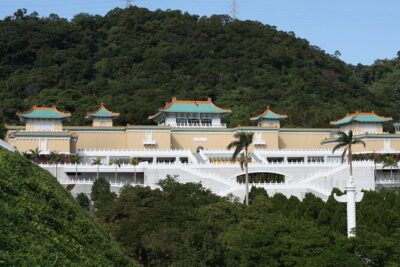
Presidential Office Building: A Short Walk From Entertainment to Power
A few steps away, you reach the Presidential Office Building, Taiwan’s political center. The building was established in 1919 and originally designed for the Office of the Governor-General of Taiwan during Japanese colonial rule.
I like this stop because it makes the timeline click. You’re not just learning that governments changed. You’re seeing the physical “control room” style of architecture that came with different regimes.
Even with a shorter stop here, this is the kind of place where a guide’s context makes your photos better. You start framing the building not only as a landmark, but as an artifact of administrative power.
228 Peace Memorial Park: Protest, Memory, and Public Space
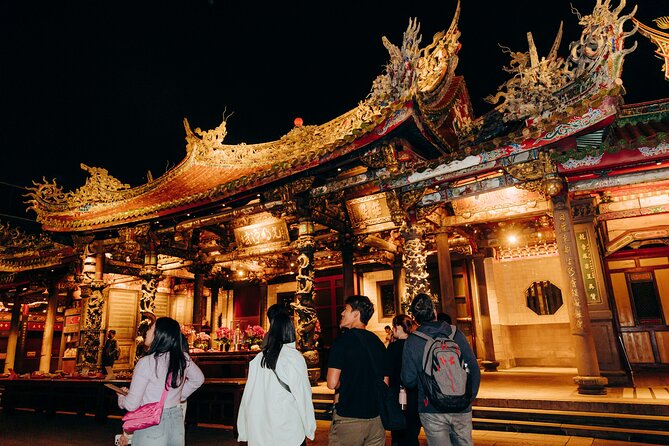
At 228 Peace Memorial Park, the theme turns from empire and administration to conflict and collective memory. The park began in 1908 during the Japanese colonial period as Taihoku New Park, and it was the first European-styled park in Taiwan.
In 1947, it became the scene of protests tied to the Kuomintang-led ROC government. This is heavy material, but it’s also important, because it shows how public space can become a stage for national turning points.
What makes this stop useful on a walking tour is pacing. You’ve already seen temples, markets, and architecture tied to rule and daily life. Here, the guide can tie those earlier layers to the political rupture that changed what people experienced afterward.
If you’re the kind of traveler who likes to understand why a place has a name like this, you’ll probably appreciate the way the park’s story is explained rather than just stated.
Chiang Kai-shek Memorial Hall: How Post-1949 Politics Show Up in Stone

The tour ends at Chiang Kai-shek Memorial Hall, a major national monument and landmark erected in memory of Chiang Kai-shek. It’s tied to his presidency of the Republic of China from 1948 to 1975.
Even if you’re not a politics buff, this stop helps you connect the dots between the end of one era and the messaging of the next. Monuments do more than commemorate. They communicate what a state wants people to remember.
Timing here matters because it’s the finish point for the walk, so you’ll leave with a cleaner mental map. If you’re trying to understand modern Taiwan, seeing how different periods are memorialized in physical form gives you a lot of leverage for the rest of your trip.
Price and Pace: Is $5 Worth Your Feet?
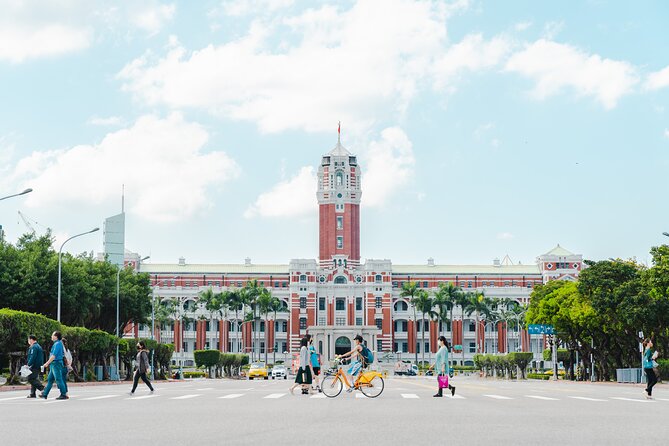
For about $5 for roughly 3 hours, this tour is a strong value for first-time Taipei visitors. You get a professional English guide, a route through multiple major sites, and generally free admission at the listed attractions.
Here’s the realistic way to judge it: you’re not paying for private car service or skip-the-line perks. You’re paying for context and direction, which is exactly what makes a short trip more efficient. If you like learning what you’re looking at while you walk, the cost-to-time ratio is excellent.
The pace also fits well for many travelers because it’s built around about 20 travelers maximum. That small-group size helps when you want to ask questions, and it usually keeps the tour from turning into a slow conga line.
Two practical things to plan around:
- Start time is 10:00 am, so you’ll want a breakfast plan that doesn’t run you late.
- It’s a shared walking tour, so you’ll be following the group flow at each stop.
Guide Quality: Why Names Like Amy, Andy, and Pauline Matter
A big reason this tour earns such high marks is the guide experience. People highlight guides such as Amy and Fu, Amy and Andy, Susie and Huawen, Luke and Mabel, and Pauline. Across names, a common thread shows up: clear English, engaging delivery, and answers that go beyond the landmark facts.
That’s important because history tours can fall into two traps: dry facts, or random storytelling. The praise here points to the sweet spot, where guides explain the why behind what you see, and they keep the energy up without rushing people through.
If you care about getting explanations that make the city feel logical, this is exactly the kind of tour where the guide makes the difference.
What to Bring So You Don’t Miss the Fun
This is a walking tour, so the “what to bring” list is simple, and it actually affects your enjoyment.
- Comfortable walking shoes (seriously, you’ll be glad for them)
- A bottle of water, especially if the weather warms up
- A light layer, since you’ll move between open outdoor areas and indoor spaces
- Your phone camera, because Colonial-era architecture and historic blocks look great when you know what to look for
If you’re someone who likes to ask questions, bring curiosity. This tour is the type where your guide can connect a building style or a name to a bigger story, and that connection is where the time payoff happens.
Who Should Book This Tour, and Who Might Want a Different Option
This tour is ideal if:
- You’re visiting Taipei for the first time and want a history framework quickly
- You like walking routes that link religion, architecture, and politics into one story
- You want a low-cost guided option with multiple major stops in a single morning
You might want to consider a different option if:
- You hate walking for long stretches, since this is still a 3-hour route
- You want deep museum-style detail at one site, because this walk is designed for breadth over long stays
Should You Book This Taipei Historic Shared Walking Tour?
Yes, I think you should book it if you want an efficient, story-driven way to understand West Taipei. The blend of Longshan Temple, Bopiliao’s trade past, Ximen Red House’s Colonial Japan clues, and the memory-centered stops at 228 Peace Memorial Park and Chiang Kai-shek Memorial Hall gives you a strong timeline in one outing.
The price makes it feel especially low-risk. You’re paying for context and direction, and the listed attractions have free admission, so you’re not adding extra costs as you go. Just plan for walking, aim for good weather days, and set aside your curiosity so your guide can turn street corners into explanations.
If your Taipei schedule is tight, this is a smart first step, not a last-minute gamble.
FAQ
Where does the tour start?
The tour starts at Taipei Historic Free Walking Tour Meeting Point – Like It Formosa108, in Wanhua District at Sec. 1, Xiyuan Rd, address 153號.
Where does the tour end?
It ends at Liberty Square, No. 21號, Zhongshan S Rd, Zhongzheng District, Taipei City, with the endpoint shown near Chiang Kai-shek Memorial Hall.
How long is the tour?
The duration is approximately 3 hours.
What time does it start?
The start time is 10:00 am.
How much does it cost?
The price is listed as $5.
Is the ticket delivered on your phone?
Yes, the tour uses a mobile ticket.
Is admission included for the stops?
The stop notes indicate free admission tickets for the listed attractions.
Are tips included in the booking fee?
No. The tip to the tour guide is not included in the booking fee.
How many people are on the tour?
The tour has a maximum of 20 travelers.
What happens if the weather is bad?
This tour requires good weather. If it’s canceled due to poor weather, you’ll be offered a different date or a full refund.
FAQ
Can I cancel for a full refund?
Yes. You can cancel for a full refund if you cancel at least 24 hours in advance of the experience start time.
Is there a limit on travelers, and can that affect the tour?
Yes. The tour requires a minimum number of travelers. If it’s canceled because the minimum isn’t met, you’ll be offered a different date or a full refund.
More Taiwan on Foot





More Taiwan Tours on the List



Everything We Have Reviewed in Taiwan

Fresh off the notebook: more Taiwan tours we have reviewed
- Keelung Shore Excursion: Private 6H Natural Wonder & Seafood Tour★ 5.0 · 3 reviews
- 8-Day Around Taiwan Private Tour★ 5.0 · 3 reviews
- Taiwan Multi-Day Classic Tour★ 5.0 · 4 reviews
- Ruifang Houtong Mining Road★ 5.0 · 4 reviews
- 1 day North Coast Yehliu Jiufen and Shifen Private Tour★ 5.0 · 4 reviews
- Hualien Taroko Day Tour From Ximending★ 5.0 · 4 reviews
Walking Tours, weighed up.
 ★ 5.0Taipei Old Town – Taiwan Introduction Walking Tour (Tip-Based)From $5175 reviews
 ★ 5.0[Private Tour] Shilin Night Market Walking Tour With a Private Tour Guide (2-hr)From $35123 reviews
 ★ 4.62-Hour Raohe Night Market Walking TourFrom $2369 reviews
 ★ 5.02-hr Raohe Night Market Walking Private Tour with a Tour GuideFrom $3561 reviews
 ★ 5.0Vintage Taipei – Best of Taiwan & Sunset Walking Tour (Tip-based)From $552 reviews
 ★ 4.3Taipei 101 Observatory – Skyline 460 Cloud WalkFrom $9536 reviews
 ★ 5.0Taipei’s Origin & Longshan Temple – Taiwan Cultural Walking TourFrom $525 reviews
 ★ 4.8Old Town Walking TourFrom $125 reviews
Where else this one shows up