
REVIEW · DADAOCHENG & TAIPEI OLD TOWN WALKS
Taipei: Old Town Walking Tour
History here has a route. In just 2.5 hours, I like how this walk stitches together Taiwan’s story with stops like the 228 Peace Memorial Park and the National Museum of Taiwan, explained in clear English by the live guide.
You’ll also get a tight, practical loop through big sights and street life, with the Red House and the Ximending markets landing at the end like a friendly finale. One possible consideration: it’s still a walking tour through the old town, so plan for a steady pace and bring comfortable shoes.
In This Review
- Key things to notice before you go
- Why this Taipei old town walk feels different
- Meeting up at NTU Hospital Station, Exit 4
- The first landmark mood shift: Presidential Office architecture
- National Museum of Taiwan and the old town context
- Learning the 228 tragedy through place, not just facts
- Zhongshan Hall: from public auditorium to civic landmark
- Ximending markets: the old town becomes current
- The octagonal Red House finale you will remember
- Price and value: how $1.10 makes sense
- The pacing and what to wear
- Guide quality: what makes the best sessions click
- Who this tour suits best
- Practical wrap-up: what you should do before and after
- Should you book this Taipei old town walking tour?
- FAQ
- Where is the meeting point?
- How long is the tour?
- Is the tour guided, and is it in English?
- What landmarks and areas does the tour include?
- Does the tour include the Ximending shopping district?
- Is the tour wheelchair accessible?
- Is a private group available?
- What is the price?
- Is there free cancellation and a pay-later option?
Key things to notice before you go
- A history-minded route that connects landmarks to major moments in Taiwan’s past
- English live guiding with guides praised for energy, memory, and factual explanations
- Real focus stops including the National Museum of Taiwan, 228 Peace Memorial Park, Zhongshan Hall, and the Red House
- Ximending time built in so you can shift from museums to markets without feeling rushed
- A clear meeting point at Taipei Metro NTU Hospital Station, Exit 4, street level
Why this Taipei old town walk feels different
Taipei can be loud and shiny, but the old town has a calmer rhythm if you know where to look. This tour is built for that. You’re not just moving from photo spot to photo spot, you’re getting context that helps the buildings make sense.
What I like most is the balance. You get official, architectural landmarks, then you get the human side of the city through old streets and market energy. It helps you see how Taipei turned into the place people come for today, instead of treating the past like background noise.
The guide is a big part of it. Based on the way guides like Leo, Vincent, and Ale are described, the best sessions focus on clarity and discussion, not a script read at high speed. That matters because this is a history-heavy walk, including the 228 tragedy.
Meeting up at NTU Hospital Station, Exit 4

You’ll start at Taipei Metro NTU Hospital Station, Exit 4, street level. If you like arriving early and getting your bearings, this is a good setup because you can find the station, then orient yourself before the group forms.
Bring a water bottle, even if you do not feel thirsty at the start. Old town walking can surprise you with how warm it feels between stops. Also, have Google Maps ready for the exact spot, since street entrances can vary a bit around the station area.
And here’s a practical tip: plan to be on time. With a walking loop, the guide’s timing matters so you still get stops long enough to absorb the story, not just glance and move on.
Deeper into old Taipei, on foot
The first landmark mood shift: Presidential Office architecture
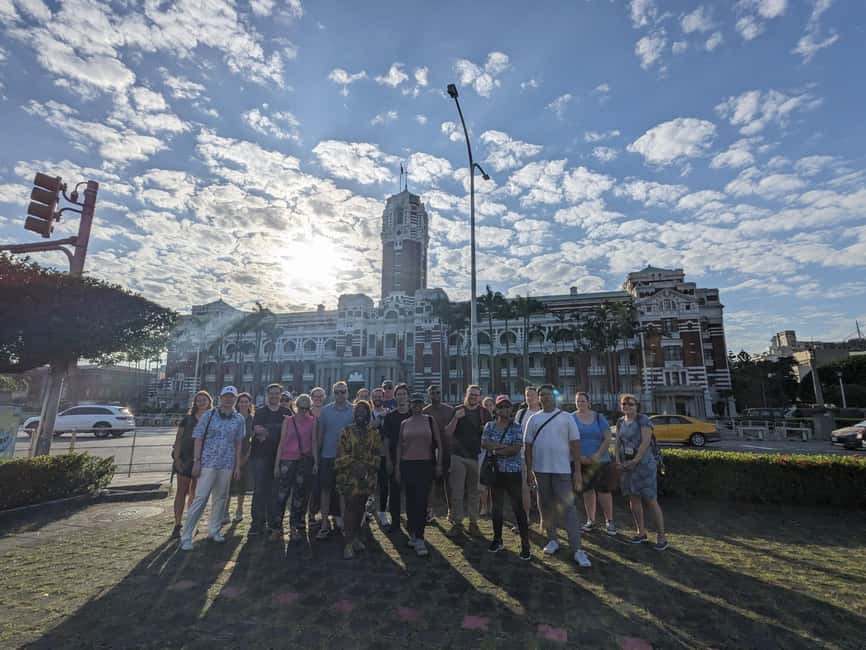
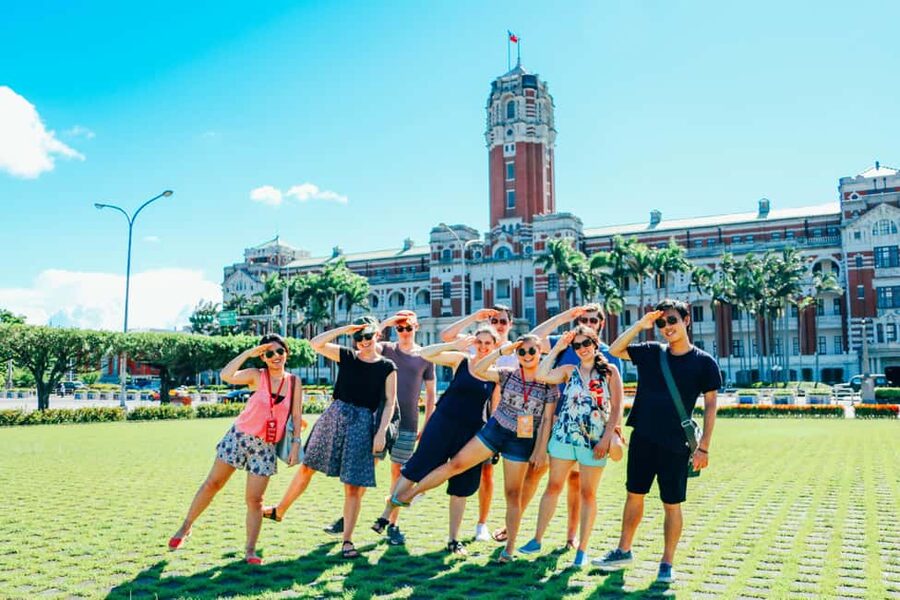
The tour moves from the meeting point into the part of Taipei where government buildings shape the feel of the streets. You’ll check out the Presidential Office, known for its architecture.
This is more than a look-see. When someone explains what you’re seeing before you move on, the building becomes a reference point. You start noticing what kind of authority a city projects, then you compare that with the markets and civic spaces later.
If you enjoy architecture, you will appreciate how the guide frames details at walking pace. If you are not an architecture person, you still should come away with a clearer sense of how Taipei’s modern identity takes shape.
National Museum of Taiwan and the old town context
Next you’ll head to the National Museum of Taiwan for a stop. You are not meant to treat it like a quick photo stop. The idea is to give the group time to absorb themes and then carry that context into the streets around it.
This part is where the tour starts to “click” for first-time visitors. Museums can feel separate from city life, but walking tours like this are designed to keep the link between objects you learn about and places you can still stand in.
From there, you continue into the historic old town atmosphere. The guide fills gaps with story, place names, and the kinds of cultural nuances that rarely show up in a standard guidebook glance.
More Taiwan on foot, at a human pace




Learning the 228 tragedy through place, not just facts
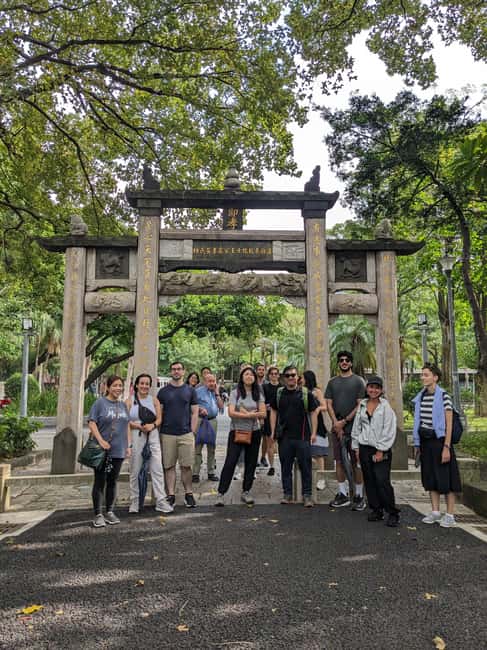
A major anchor stop is 228 Peace Memorial Park, along with the story of the 228 tragedy explained by your guide. This is the emotional and historical heart of the tour.
What makes this stop work is the location-based approach. When someone explains a heavy chapter of history while you are standing near the memorial space, the information feels grounded rather than abstract.
The guides seem to do this well. Several comments highlight guides who are not only energetic, but also careful and factual, with strong memory. That’s important here because this is not the kind of topic you want handled casually.
You should come with the mindset of learning, not just sightseeing. If you are comfortable with serious history, you will get a lot out of this segment. If you prefer only light entertainment, you might find it intense, but the tour does not ignore the respectful nature of the subject.
Zhongshan Hall: from public auditorium to civic landmark
After the history stop in the old town, the walk continues toward Zhongshan Hall. This is presented as a former public auditorium, and the guide helps you understand why it matters.
This is a smart piece of the itinerary because it connects culture and civic life. A hall like this is not only a building, it’s a place where public events happen, and those events reflect the city’s changing priorities.
If you enjoy walking tours where the guide ties buildings to everyday meaning, you’ll likely like this segment. It also gives your brain a break from the heaviest topic, shifting into a “how public life worked” perspective.
Ximending markets: the old town becomes current
Then you move toward Ximending, Taipei’s well-known shopping district. The shift from memorial and civic buildings to street markets is not random. It gives you a chance to see what Taipei’s energy feels like when it’s not being described.
You’ll pass through areas with market stalls selling souvenirs and lots of everyday items. Think of it as the practical, current version of the city, where you can browse while keeping the historical context fresh in your mind.
Here’s the key value: the tour doesn’t end at a museum door. It ends near the places you’ll likely revisit on your own, which helps you turn one guided walk into several useful hours afterward.
If you like street scenes and shopping that does not feel too formal, Ximending is a strong way to finish. If you prefer quiet museums, you may treat this portion as a chance to people-watch and snack.
The octagonal Red House finale you will remember
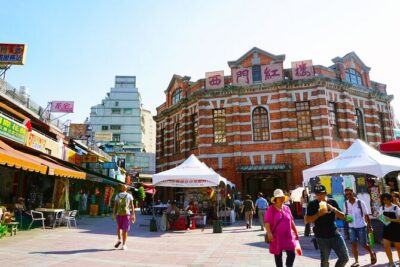
The final landmark is the Red House, a red-brick Western building made in the shape of an octagon. It’s described as Taipei’s first public market, which is a great fact to carry as you stand there.
This stop is a satisfying close because it ties the tour together. You started with historical framing, walked through civic architecture, learned about a major tragedy, then ended at a building tied to everyday commerce.
It is also a visually distinctive spot. Even if you are not chasing perfect photos, the octagonal shape and brickwork make it easy to understand why the building draws attention.
If you time your arrival right, you can use this final stop to ask your guide the practical questions, like what to do next in the area or which streets are worth revisiting after the group disperses.
Price and value: how $1.10 makes sense
At $1.10 per person, the price looks almost unreal, especially for a guided, English-language tour with multiple key stops. Even if you ignore the exact cost and focus on what you get, the value is strong.
You’re paying for three big things:
- A guided history narrative that covers the 228 tragedy and other Taiwan history facts
- Time in major landmarks that would take effort to connect on your own
- A structured walking loop that ends in a practical area like Ximending
Will you do the same stops solo? You could. But you would likely spend extra time figuring out what to prioritize and what to connect, and you might miss the story thread that makes the route feel cohesive.
One small reality check: ultra-low pricing sometimes means the experience has a fixed format and group timing. The good news is that this one still feels purposeful, with guided stops planned to keep learning and walking moving together.
The pacing and what to wear
The tour is listed as 2.5 hours, which is long enough to feel like you left with more than a few photos, but short enough to avoid being a full half-day slog.
Still, it’s not a “sit-down history lecture.” You’ll be moving through streets between landmark clusters. That means the physical comfort matters.
Wear comfortable shoes and dress for walking weather. If it’s hot or humid, plan for slow moments when your guide talks, then pick up pace between stops.
If you get tired easily, consider taking brief pauses at stops that have benches or sheltered areas. Your guide will typically keep the group moving, but stops like memorials and halls give you a chance to reset your body.
Guide quality: what makes the best sessions click
One reason this tour earns such a high rating is how the guide works with the group. Comments highlight guides described as passionate, informative, energetic, and factual, with an impressive memory.
You can also see a pattern: guides encourage questions and make history feel approachable. That’s a big deal when a tour includes heavier topics like the 228 tragedy. If you want to ask follow-ups, this kind of guide style usually makes it easier.
You’ll want to do your part too. If there’s a particular part of Taiwan history that interests you, jot down a question in advance. Then ask it at a natural pause point, not while the group is mid-walk.
Names you may encounter include Leo, Vincent, and Ale, all described positively in English-speaking sessions. If you’re booking for the guiding style, that’s reassuring.
Who this tour suits best
This is a strong fit for:
- First-time visitors who want a fast, history-linked introduction to Taipei
- People who like walking tours with actual context, not just landmarks
- Travelers who want the Taipei old town route plus an end in a lively district like Ximending
If you strongly prefer only light and fun sightseeing, the history content might feel like more than you expected. The 228 tragedy segment is meaningful, and the tour gives it real attention.
If you are traveling with someone who wants both street atmosphere and story, this format tends to satisfy both kinds of interests.
Practical wrap-up: what you should do before and after
Before you go, scan your day schedule and protect at least a little time afterward. If the tour ends near Ximending, you can keep exploring immediately while the history context is fresh.
After the tour, consider walking back through the streets at a slower pace. You’ll notice things you otherwise would have missed, because now you have the “why” behind key stops like Zhongshan Hall and the Red House.
Also, keep an eye on your phone battery. It’s helpful for quick map checks and finding specific corners in Ximending once you break off.
Should you book this Taipei old town walking tour?
Yes, if you want an efficient, English-guided walk that connects Taipei’s landmarks to real historical meaning. The route is short enough to stay easy to fit, but structured enough to leave you with a clearer understanding of Taiwan’s story.
I’d skip it only if you want a mostly entertainment-only city stroll, or if you are uncomfortable with serious history. Otherwise, for the price and the mix of civic landmarks plus market energy, this is a smart way to spend a half-day.
FAQ
Where is the meeting point?
The meeting point is Taipei Metro NTU Hospital Station Exit 4, street level. You can also use the provided Google Map link for the exact spot.
How long is the tour?
The duration is 2.5 hours.
Is the tour guided, and is it in English?
Yes, it includes a live tour guide, and the tour is offered in English.
What landmarks and areas does the tour include?
You’ll see stops including the Presidential Office, Zhongshan Hall, the Red House, the National Museum of Taiwan, 228 Peace Memorial Park, and you’ll explore Ximending.
Does the tour include the Ximending shopping district?
Yes, the tour includes time walking through Ximending, including the markets and stalls.
Is the tour wheelchair accessible?
The tour is listed as wheelchair accessible.
Is a private group available?
Yes, private group options are available.
What is the price?
The price is $1.10 per person.
Is there free cancellation and a pay-later option?
Cancellation is listed as free up to 24 hours in advance for a full refund. There is also a reserve now and pay later option.
More Taiwan Tours on the List

Everything We Have Reviewed in Taiwan


Old Taipei, Street by Street
Fresh off the notebook: more Taiwan tours we have reviewed
- From Taipei: Best of Taiwan 9-Day Trip with Accommodation★ 4.7 · 3 reviews
- ️ ️ Keelung Shore Excursion 6-Hour Taipei City Tour★ 5.0 · 3 reviews
- Keelung: Shore Excursion Private 8H Taipei Urban Adventure★ 4.7 · 4 reviews
- From Taipei City: 3-Day Sun Moon Lake & Alishan Private Tour★ 4.8 · 4 reviews
- From Keelung: Private Taipei City Landmarks Shore Excursion★ 5.0 · 4 reviews
- From Taipei: Thousand-Island Lake & Tea Museum Private Tour★ 4.7 · 5 reviews
Dadaocheng & Taipei Old Town Walks, weighed up.
 ★ 5.0Taipei Old Town – Taiwan Introduction Walking Tour (Tip-Based)From $5175 reviews
 ★ 5.0Taipei Cooking Class & Market Adventure in Historic DadaochengFrom $9077 reviews
 ★ 5.0Taipei’s Origin & Longshan Temple – Taiwan Cultural Walking TourFrom $525 reviews
 ★ 4.6Taipei’s Origin & Longshan Temple – Taiwan Cultural TourFrom $119 reviews
 ★ 4.9Cooking Class & Market Adventure Historic DadaochengFrom $9917 reviews
 ★ 5.02-Hour Private Dadaocheng Walking TourFrom $3513 reviews
Where else this one shows up